
Bookkeeping is one of those business tasks that is easy to postpone when you’re busy serving customers, managing staff and trying to grow. But leaving your financial records untouched for months can make it harder to understand what is really happening inside your business
So, how often should a small business update its bookkeeping?
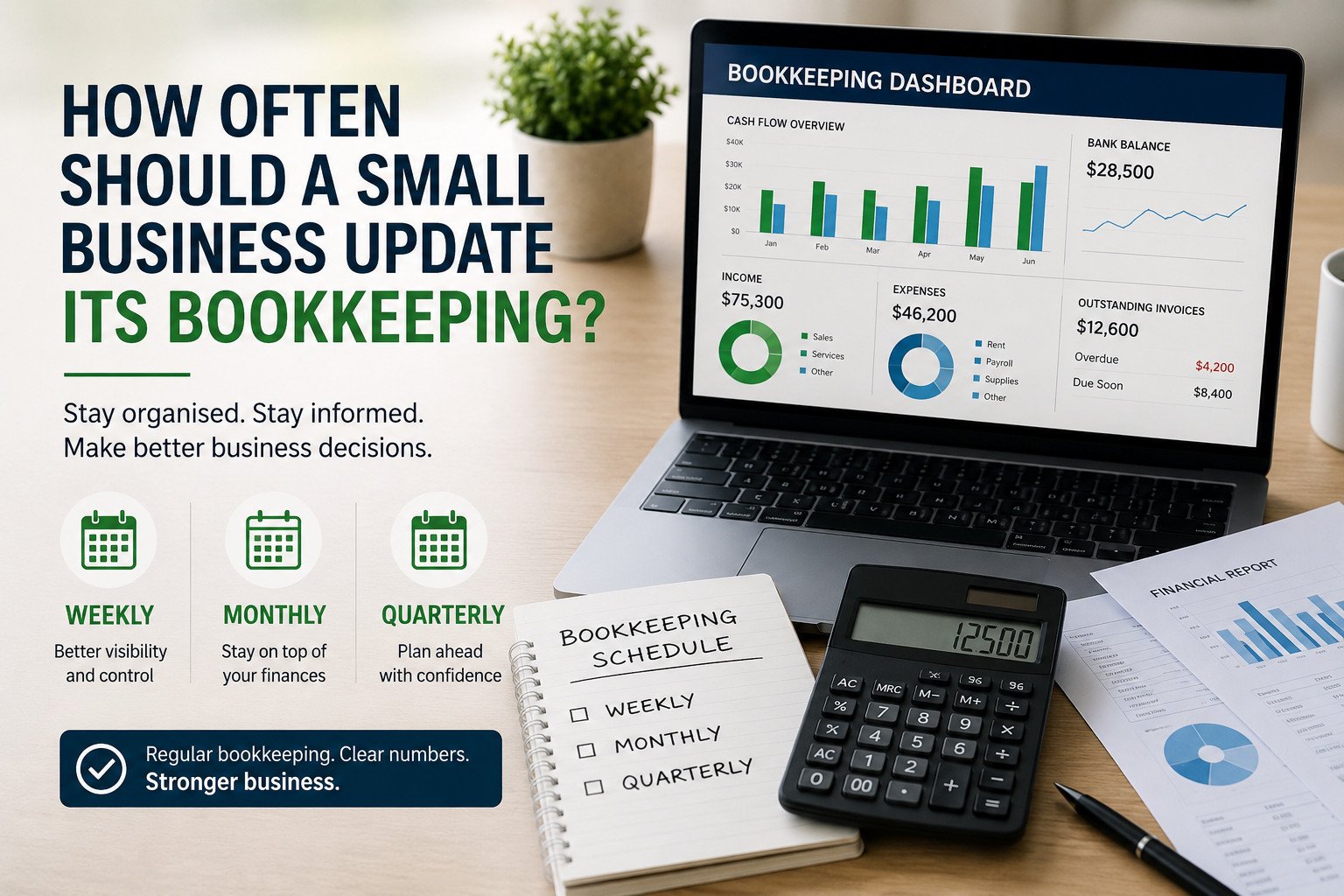
For most businesses, monthly bookkeeping is a practical minimum. However, weekly bookkeeping can be more useful when the business has a high volume of transactions, employees, regular supplier payments or changing cash flow.
What Is Bookkeeping?
Bookkeeping is the process of recording and organising your business’s financial transactions. It can include sales, expenses, invoices, payments, bank transactions, payroll and other financial records.
Good bookkeeping gives you an accurate picture of where your business stands financially. It also provides the information your accountant needs for reporting, tax and business planning.
For Sydney small businesses using cloud accounting software such as Xero, MYOB or QuickBooks, keeping records updated regularly can make financial management much easier. Dual Peaks Accounting supports businesses with bookkeeping, payroll and cloud accounting solutions.
How Often Should You Do Your Bookkeeping?
Weekly Bookkeeping
Weekly bookkeeping is useful for businesses with frequent financial activity.
It can help you:
- Keep bank transactions up to date
- Track unpaid invoices
- Monitor business expenses
- Identify unusual transactions
- Maintain better cash flow visibility
- Keep financial information current
If your business receives and makes payments every day, waiting until the end of the month may mean you’re making decisions using outdated information.
Monthly Bookkeeping
Monthly bookkeeping is often suitable for smaller businesses with relatively straightforward transactions.
A monthly process can include:
- Bank reconciliation
- Recording income and expenses
- Accounts payable and receivable
- Payroll records
- Financial reporting
- Reviewing outstanding invoices
Monthly bookkeeping also gives business owners an opportunity to review their financial performance before the next month begins.
Quarterly Bookkeeping
Quarterly bookkeeping may work for very small businesses with limited transactions, but it requires careful planning.
If your business has BAS, GST, payroll or other regular reporting responsibilities, leaving bookkeeping until the end of a quarter can create unnecessary pressure.
Regular records make it easier to prepare accurate information when reporting deadlines arrive.
Why Regular Bookkeeping Matters
1. Better Cash Flow Management
Your bank balance does not always tell the complete story. You may have unpaid invoices, upcoming supplier bills, tax obligations or payroll commitments.
Up-to-date bookkeeping helps you understand your actual financial position.
2. Easier Tax and BAS Preparation
Accurate financial records make it easier to prepare tax returns and BAS information. Dual Peaks Accounting provides bookkeeping, BAS and tax-related support for Sydney businesses.
3. Faster Business Decisions
When your financial records are current, you can make decisions based on recent information rather than guessing.
This can be particularly important when deciding whether to hire employees, purchase equipment, increase spending or invest in growth.
4. Less Financial Stress
Leaving bookkeeping until the last minute can create a large administrative workload. Regular bookkeeping spreads that work throughout the year and makes financial records easier to manage.
What Is the Best Bookkeeping Schedule for Your Business?
There is no single schedule that works for every business.
A simple business with limited transactions may be comfortable with monthly bookkeeping. A growing company with employees, regular payments and significant transaction volume may benefit from weekly bookkeeping.
The important thing is consistency.
If bookkeeping is becoming difficult to manage internally, professional bookkeeping services in Sydney can help keep financial records organised and up to date.
Final Takeaway
For most small businesses, monthly bookkeeping is a sensible minimum, while weekly bookkeeping can provide better visibility for businesses with more frequent financial activity.
The goal is not simply to keep records for compliance. Accurate and current bookkeeping can help you understand cash flow, monitor performance and make more informed business decisions.
If your bookkeeping is taking too much time or your financial records are falling behind, Dual Peaks Accounting provides bookkeeping, payroll, tax and business advisory support for Sydney businesses.