As a small business grows, its tax obligations can become more complex. One important milestone is understanding when to register for Goods and Services Tax (GST).
Registering at the right time helps businesses meet their obligations, issue appropriate invoices and manage their financial records correctly. Waiting too long can create unnecessary administrative pressure.
What Is GST?
GST is a 10% tax applied to most goods and services sold or consumed in Australia, subject to relevant rules and exemptions.
Businesses registered for GST generally collect GST on taxable sales and may claim GST credits for eligible purchases used in their business.
GST registration affects how you prepare invoices, record transactions and report business activity to the Australian Taxation Office (ATO).
What Is the GST Registration Threshold?
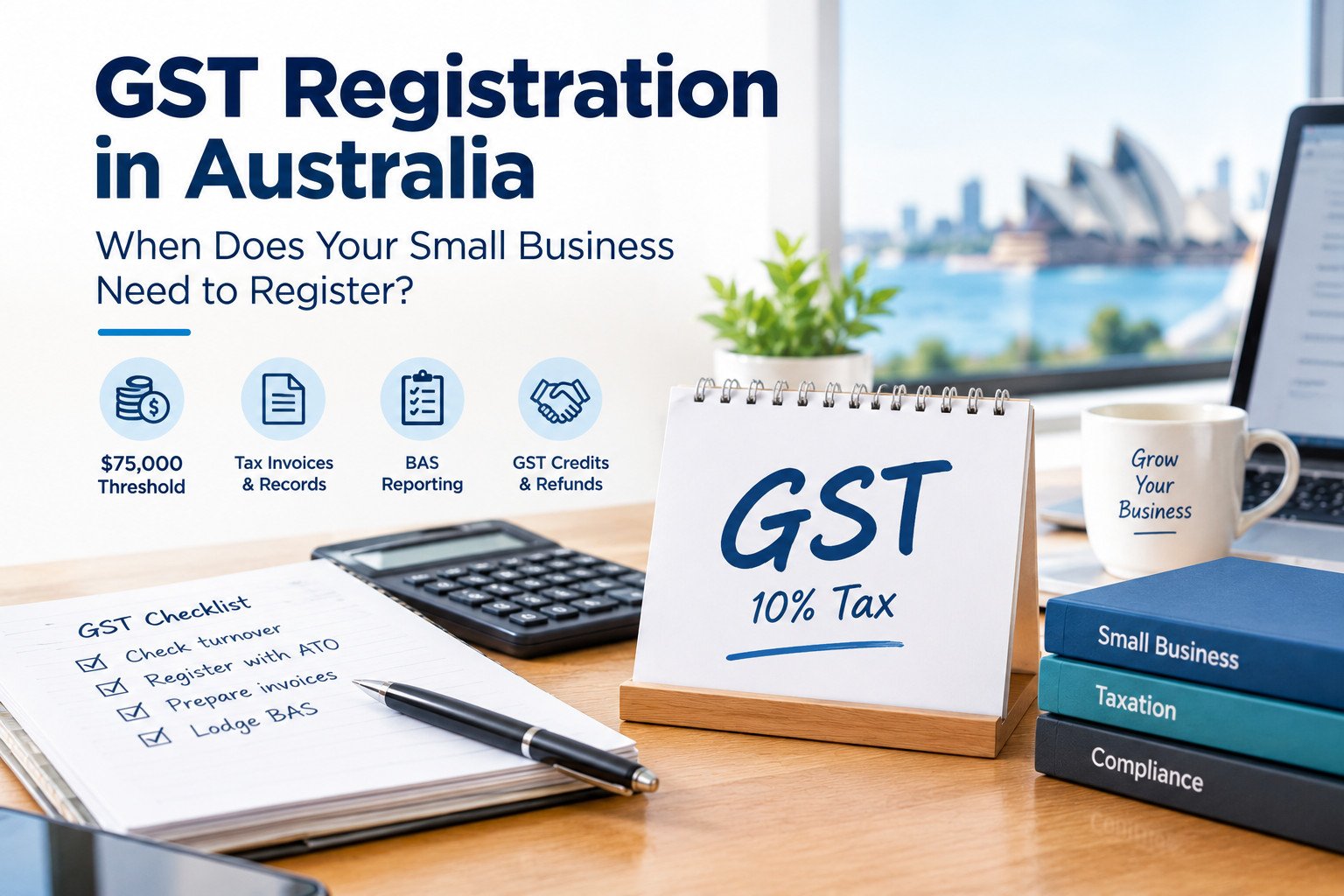
For most businesses, GST registration is generally required when current or projected GST turnover reaches $75,000 or more.
The threshold is based on GST turnover, not simply the amount of money remaining after expenses. GST turnover generally considers the value of relevant sales, excluding certain amounts under the applicable rules.
Some businesses must register regardless of the usual threshold. For example, different rules apply to taxi and ride-sourcing services.
Because the rules depend on business activities and circumstances, owners should check their position rather than relying only on a bank balance or profit figure.
What Happens When Your Business Reaches the Threshold?
If you are required to register, you generally need to apply within 21 days of becoming required to register.
Once registered, you may need to:
-
Include GST on applicable taxable sales.
-
Issue tax invoices when required.
-
Keep records of business sales and purchases.
-
Lodge Business Activity Statements (BAS) as required.
-
Report GST collected and eligible GST credits.
The precise requirements depend on your registration and reporting arrangements.
Should You Register Before Reaching the Threshold?
Voluntary GST registration may be an option for some businesses below the threshold.
For example, a business making substantial eligible purchases may want to understand whether claiming GST credits would be beneficial. However, registration also brings additional responsibilities, and GST may affect pricing for customers.
Before registering voluntarily, consider your customers, business expenses, expected turnover and ability to maintain accurate records.
How Can You Prepare?
Review your sales regularly and maintain reliable accounting records. Use accounting software to track turnover and retain invoices for relevant transactions.
If your business is approaching the threshold, discuss your circumstances with an accountant so you can understand when registration is required and how to prepare for BAS reporting.
Final Thoughts
GST registration is an important part of running a compliant Australian business. Monitoring turnover and understanding your responsibilities can help you avoid last-minute decisions.
Dual Peaks Accounting can help your business review its accounting records and understand its GST and reporting requirements.
This article is general information only. Confirm current registration requirements with the ATO or your tax professional.