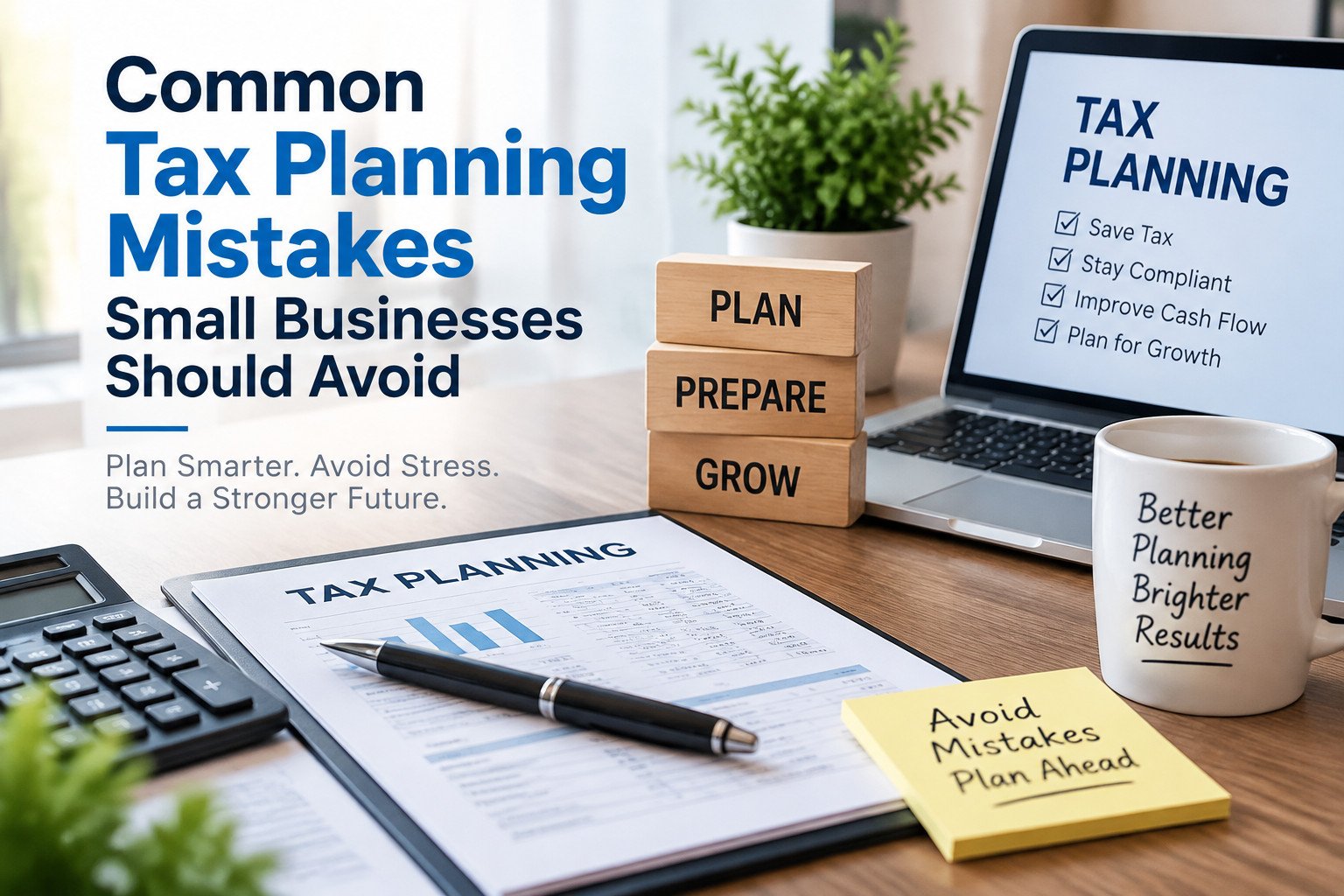
Tax planning is an important part of running a successful business. Many small business owners focus on sales, customers, and daily operations but overlook the importance of preparing their finances for tax obligations.
Poor tax planning can create unnecessary stress, missed opportunities, and unexpected financial pressure.
Understanding common tax planning mistakes can help business owners improve financial management and stay prepared throughout the year.
Leaving Tax Planning Until Tax Time
One of the most common mistakes small businesses make is waiting until the end of the financial year to think about taxes.
Last-minute preparation can make it difficult to identify opportunities and properly organise financial information.
Tax planning should be an ongoing process. Reviewing your financial position regularly helps you stay prepared and avoid surprises.
Poor Record Keeping
Accurate financial records are essential for effective tax management.
Many businesses experience difficulties during tax time because their records are incomplete or not properly organised.
Important records include:
- Sales invoices
- Expense receipts
- Payroll records
- Bank statements
- Financial reports
Maintaining accurate records throughout the year makes tax preparation easier and more efficient.
Not Tracking Business Expenses
Some business owners fail to monitor their expenses properly because they are unsure which costs relate to business activities.
Tracking expenses helps you understand your spending patterns and provides a clearer picture of your business performance.
Organised expense records also help ensure accurate financial reporting.
Not Preparing for Tax Payments
Unexpected tax bills can create cash flow problems for small businesses.
Without proper planning, businesses may struggle to manage tax obligations when payments become due.
Setting aside funds and reviewing future obligations helps maintain better financial control.
Ignoring Professional Tax Advice
Tax rules can be complex and may change over time. Managing everything without professional advice can increase the risk of mistakes.
An experienced accountant can help you understand your responsibilities and create effective tax strategies.
Benefits of Proper Tax Planning
Good tax planning helps businesses:
- Stay organised
- Improve cash flow management
- Reduce financial stress
- Make better decisions
- Prepare for future expenses
Planning ahead allows business owners to focus more on growing their business.
Final Thoughts
Avoiding common tax planning mistakes small businesses make can improve financial stability and reduce unnecessary pressure.
By keeping accurate records, planning ahead, and working with experienced professionals, businesses can manage their tax responsibilities more effectively.