
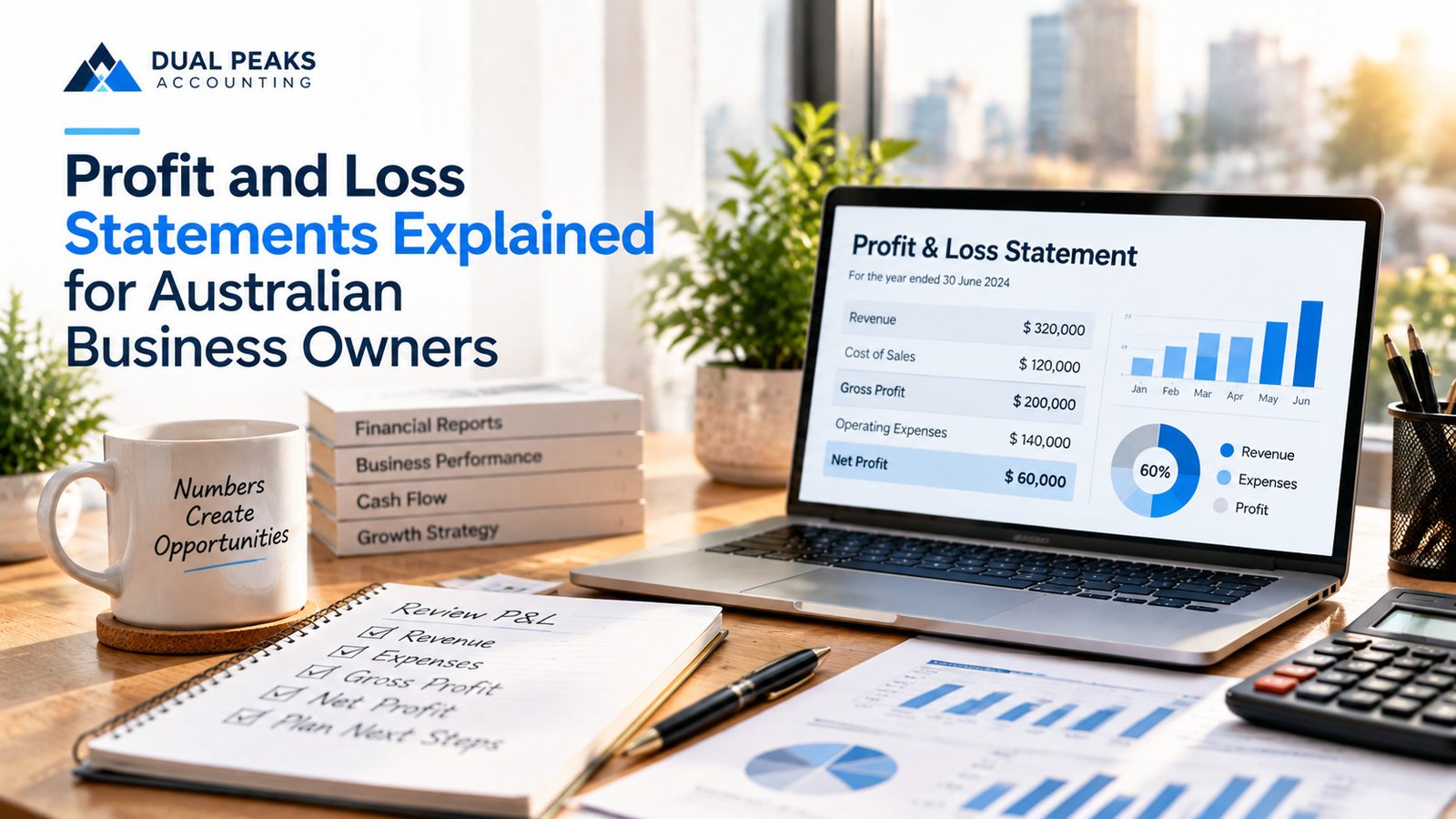
Understanding your business finances is essential for making better decisions. One of the most important financial reports every business owner should understand is the profit and loss statement.
A profit and loss statement provides a clear overview of how much money a business earns, spends and generates over a specific period.
For Australian businesses, this report is a valuable tool for monitoring performance and planning future growth.
What Is a Profit and Loss Statement?
A profit and loss statement, also known as a P&L report, shows the financial performance of a business.
It usually includes:
- Revenue
- Operating expenses
- Cost of goods sold
- Gross profit
- Net profit or loss
This information helps business owners understand whether their operations are financially successful.
Why P&L Reports Matter
Many business owners focus only on bank balances, but a bank balance does not always show the complete financial picture.
A profit and loss statement helps identify:
- Whether revenue is increasing
- Which expenses are growing
- Profitability trends
- Areas requiring improvement
- Opportunities for expansion
Regularly reviewing financial reports allows owners to make decisions based on accurate information.
Understanding Revenue and Expenses
Revenue represents the income generated by a business from selling products or services.
Expenses include costs required to operate the business, such as:
- Rent
- Software
- Marketing
- Employee wages
- Suppliers
- Professional services
Comparing revenue against expenses shows whether the business is generating sustainable profits.
How Business Owners Can Use P&L Reports
A profit and loss statement can help with:
Better Budget Planning
Business owners can identify spending patterns and prepare more accurate budgets.
Improved Decision Making
Financial information helps owners decide when to hire employees, invest in equipment or expand services.
Identifying Problems Early
Declining profits or increasing expenses can be detected before they become serious issues.
How Often Should Businesses Review Their P&L?
The frequency depends on the size and complexity of the business.
Many growing businesses review financial reports monthly because regular monitoring provides better control.
Frequent reviews help owners stay informed and respond quickly to changes.
Professional Accounting Support
Understanding financial reports can be challenging without accounting experience.
Professional accountants help business owners interpret financial information and identify opportunities for improvement.
With accurate reporting, businesses can make confident decisions and plan for sustainable growth.
Conclusion
A profit and loss statement is more than a financial document — it is a valuable business management tool.
Australian business owners who regularly review their financial performance can better understand their position, control expenses and create stronger growth strategies.