Starting a business involves more than choosing a name and finding customers. One of the earliest decisions is selecting the right business structure.
In Australia, operating as a sole trader and setting up a company are two common options. Each has different legal responsibilities, tax considerations and administrative requirements. Understanding these differences can help you choose a structure that suits your current needs and future plans.
What Is a Sole Trader?
A sole trader is an individual who operates a business in their own name or under a registered business name.
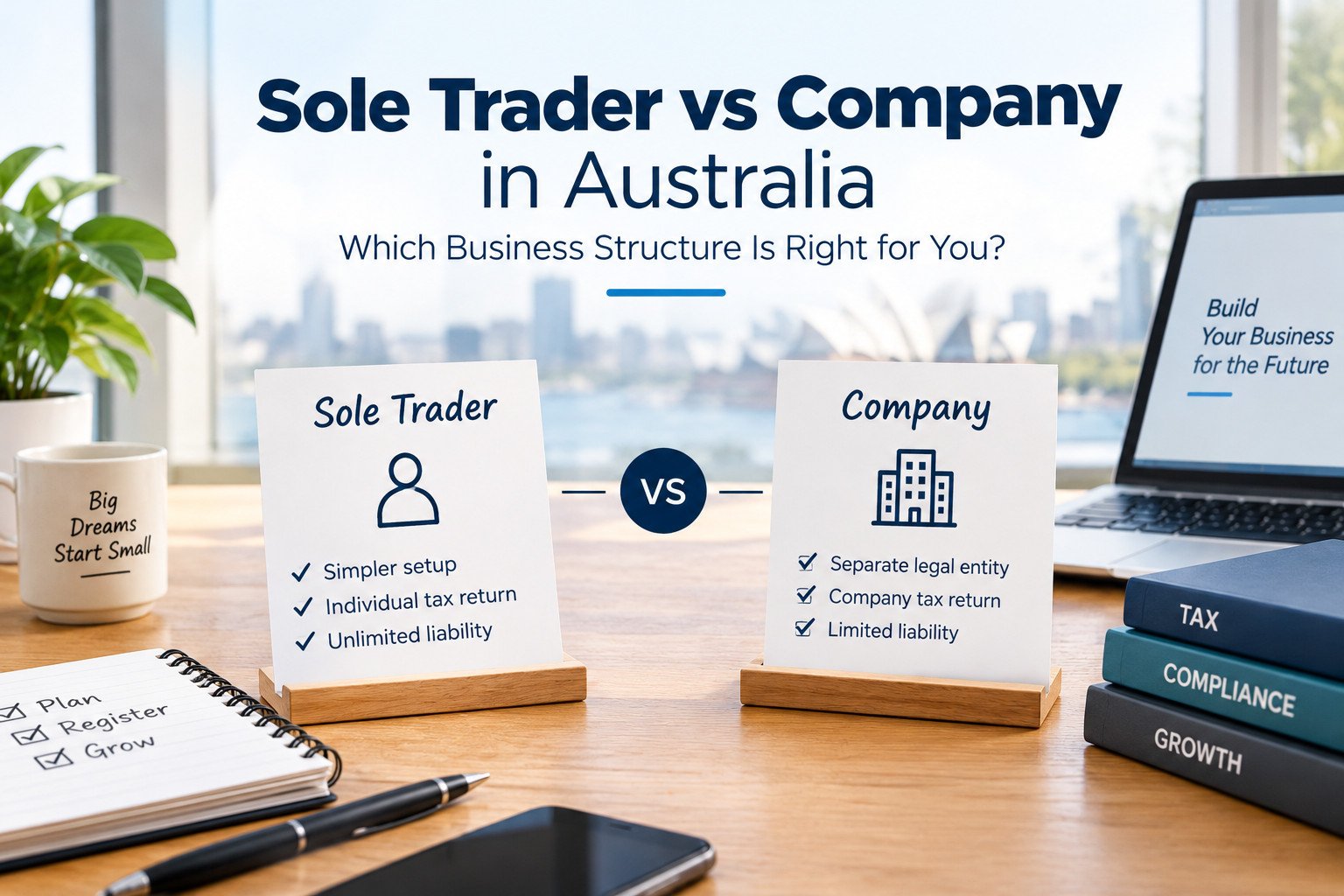
This structure is generally simpler to establish and manage than a company. Business income is usually included in the owner’s individual tax return, and the owner maintains responsibility for business obligations.
However, a sole trader and their business are not separate legal entities. This means personal assets may be exposed to business liabilities, subject to applicable laws and circumstances.
What Is a Company?
A company is a separate legal entity registered with the Australian Securities and Investments Commission (ASIC).
A proprietary limited company, commonly identified by “Pty Ltd”, can provide a different legal and financial structure from a sole trader business. The company has its own reporting obligations, tax arrangements and governance responsibilities.
Company directors must understand their legal duties, including obligations relating to company records, taxation and financial management.
A company may offer advantages for certain businesses, but it also involves additional administration and costs.
Key Differences to Consider
Tax treatment
Sole trader business profits are generally assessed as the individual’s income. A company lodges its own tax return and may be subject to different tax rules.
The most suitable structure depends on the business’s income, expenses, future plans and personal circumstances. A company structure does not automatically result in lower overall tax.
Personal liability
Sole traders are personally responsible for business debts and obligations. A company can provide limited liability in many circumstances, but this protection is not absolute.
Directors may still have personal responsibilities or liabilities under certain laws and circumstances.
Administration
Sole traders generally have fewer company-specific reporting requirements. Companies must meet ASIC obligations and maintain appropriate company records.
Your expected workload and ability to manage these responsibilities should form part of the decision.
Future growth
If you plan to bring in investors, expand operations or change ownership, a company structure may suit your plans. A sole trader structure can be appropriate for individuals who want a simpler business arrangement.
Can You Change Your Business Structure Later?
Yes, it may be possible to change structures as your business grows. However, restructuring can involve tax consequences, asset transfers, registrations and legal considerations.
It is sensible to obtain advice before making changes rather than waiting until the business has become more complex.
Final Thoughts
There is no single business structure that suits everyone. The right choice depends on your business activities, risk exposure, income, growth plans and administrative capacity.
Dual Peaks Accounting can help you understand the accounting and tax considerations before you decide which structure is suitable for your business.
This article provides general information and is not individual legal or tax advice.