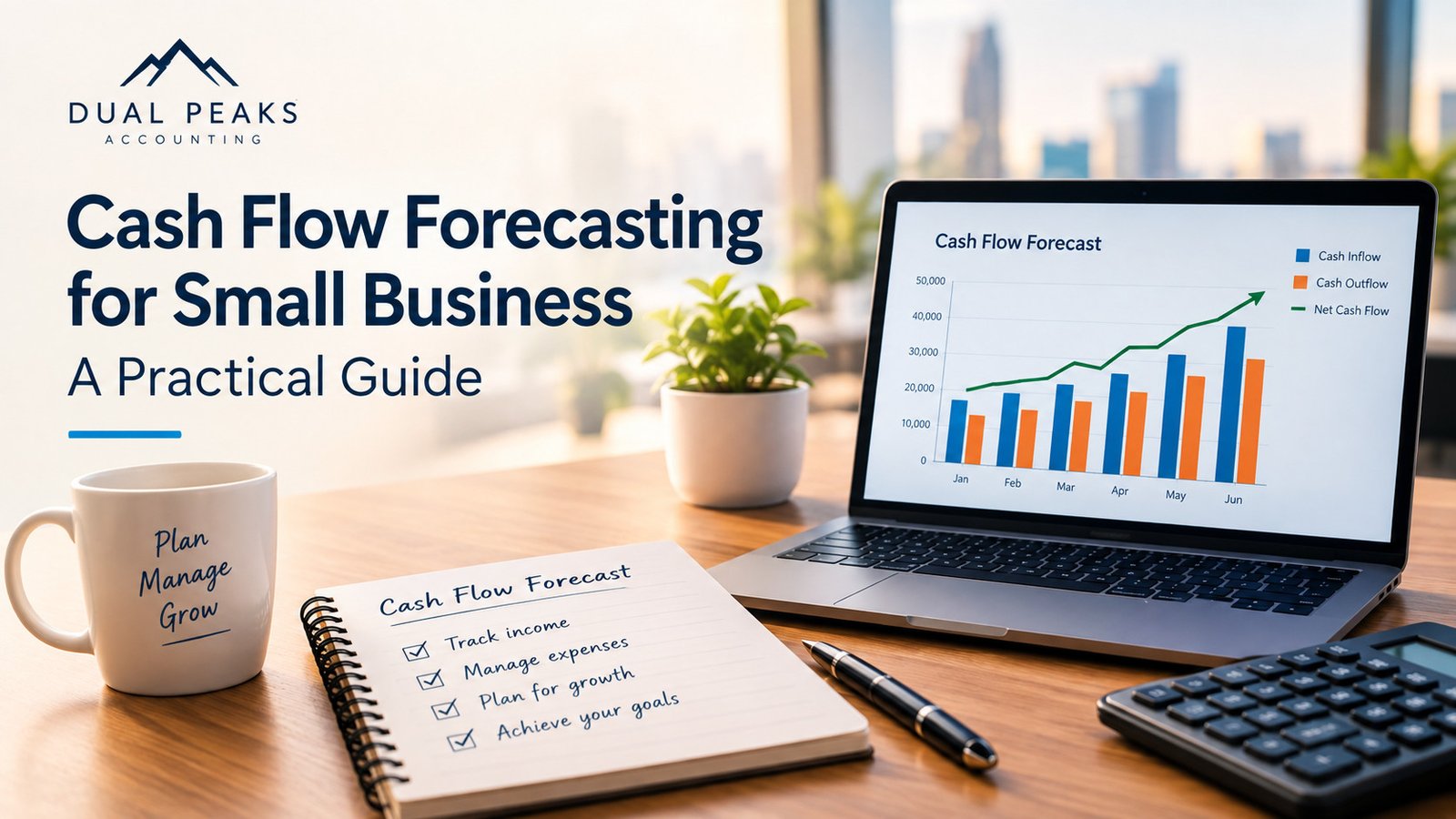
Running a profitable business does not always mean having enough money available when you need it.
A business can generate strong sales and still experience financial pressure if customers pay late, expenses increase unexpectedly or large payments fall due before revenue reaches the bank account.
This is why cash flow forecasting can be an important financial management tool for small businesses.
A cash flow forecast helps you estimate how much money is expected to enter and leave your business over a particular period. Instead of simply looking at what happened in the past, it gives you a forward-looking view of your financial position.
For small business owners, this can make it easier to identify potential cash shortages, plan upcoming expenses and make more informed business decisions.
What Is Cash Flow Forecasting?
Cash flow forecasting is the process of estimating the money you expect your business to receive and pay over a future period.
A forecast may cover the next month, quarter or year depending on your business and planning requirements.
Expected cash inflows might include:
-
Customer payments
-
Product or service sales
-
Recurring revenue
-
Loan proceeds
-
Other business income
Expected cash outflows might include:
-
Supplier payments
-
Wages and superannuation
-
Rent
-
Insurance
-
Loan repayments
-
Equipment purchases
-
Software subscriptions
-
GST and tax obligations
-
Marketing expenses
-
Other operating costs
By comparing expected inflows with expected outflows, you can estimate how much cash your business may have available at different points in time.
Why Is Cash Flow Important for Small Businesses?
Cash keeps a business operating.
Even when your profit and loss statement shows a profit, you may not necessarily have that amount sitting in your bank account.
For example, your business might invoice $30,000 during a month. However, if customers do not pay those invoices for another 30 or 60 days, the business may still need to cover wages, rent, suppliers and other expenses in the meantime.
This difference between earning revenue and actually receiving cash is one reason cash flow management matters.
Benefits of Cash Flow Forecasting
1. Identify Potential Cash Shortages Earlier
One of the biggest advantages of forecasting is visibility.
If your forecast indicates that expenses may exceed available cash in two months, you have time to investigate the issue before it becomes urgent.
You might review expenses, follow up outstanding invoices, adjust purchasing decisions or discuss funding requirements.
Early visibility gives you more options.
2. Plan for Tax and BAS Obligations
Tax obligations can create significant cash flow pressure when businesses do not plan for them.
Depending on your circumstances, your business may need to prepare for GST, PAYG withholding, income tax, superannuation and other obligations.
Including expected payments in your cash flow forecast can help reduce the risk of treating money required for future obligations as available operating cash.
3. Make Better Hiring Decisions
Hiring an employee involves more than paying a salary.
Businesses may also need to consider superannuation, payroll-related obligations, equipment, software, training and other employment costs.
A cash flow forecast can help you understand whether your business is financially positioned to support those costs.
4. Prepare for Business Growth
Growth often requires cash before it generates additional revenue.
You might need to purchase inventory, hire employees, increase marketing expenditure or invest in equipment.
Forecasting can help you understand the financial impact of those decisions before committing significant resources.
5. Manage Seasonal Changes
Many businesses experience periods of stronger and weaker demand.
If you know that revenue usually falls during particular months, a forecast can help you prepare for those periods.
Similarly, businesses expecting a busy season may need to plan for additional inventory, employees or operating costs before the extra revenue arrives.
Cash Flow vs Profit: What Is the Difference?
Profit and cash flow are related, but they are not the same.
Profit generally measures revenue less expenses over a particular period.
Cash flow measures the actual movement of money into and out of the business.
A business can therefore be profitable while experiencing cash flow difficulties.
For example, you may record revenue when invoices are issued, but the cash may not be received until weeks later.
Understanding both profitability and cash flow provides a clearer picture of business performance.
What Should a Cash Flow Forecast Include?
A useful forecast should reflect the actual way your business operates.
Start with your expected opening cash balance.
Then estimate incoming cash, including customer payments and other income.
Next, list expected outgoing payments such as:
-
Wages
-
Suppliers
-
Rent
-
Utilities
-
Insurance
-
Loan repayments
-
Tax obligations
-
Software
-
Marketing
-
Equipment
-
Other operating expenses
The difference between expected inflows and outflows provides an estimated closing cash position.
That closing balance then becomes the starting point for the next forecasting period.
How Often Should You Update a Cash Flow Forecast?
A cash flow forecast should not be created once and forgotten.
Business conditions change.
Customers may pay earlier or later than expected. Expenses may increase. Sales forecasts may change. New opportunities or unexpected costs may arise.
Many businesses can benefit from reviewing their cash flow forecast monthly.
Businesses with tighter cash flow, rapid growth or significant transaction volumes may benefit from more frequent reviews.
The important point is to compare your forecast with actual results and update your assumptions when circumstances change.
Common Cash Flow Forecasting Mistakes
Being Too Optimistic About Sales
Forecasts should be based on reasonable assumptions rather than ideal outcomes.
If sales consistently take longer to convert into cash, your forecast should reflect that.
Ignoring Late Customer Payments
Revenue does not help cash flow until the money is received.
Consider realistic customer payment behaviour when estimating incoming cash.
Forgetting Irregular Expenses
Annual insurance, equipment purchases, tax payments and other occasional costs can easily be overlooked.
Include these expenses when they are expected to occur.
Failing to Update the Forecast
An outdated forecast quickly becomes less useful.
Review actual results against your forecast and make adjustments regularly.
When Should You Consider Professional Help?
Cash flow forecasting becomes particularly valuable when your business is:
-
Growing quickly
-
Hiring employees
-
Experiencing cash shortages
-
Taking on new debt
-
Purchasing equipment
-
Expanding into new markets
-
Managing significant tax obligations
-
Experiencing seasonal revenue
-
Preparing for major investment
An accountant or business advisor can help you review historical financial information, develop realistic assumptions and understand what your forecast means for future decisions.
Final Thoughts
Cash flow forecasting is not about predicting the future perfectly.
It is about creating greater financial visibility.
A well-maintained forecast can help you understand when money is expected to enter and leave your business, identify potential pressure points and prepare for important financial decisions.
For small business owners, that visibility can make the difference between reacting to financial problems and preparing for them in advance.
Need Help With Cash Flow Planning?
Dual Peaks Accounting supports Sydney businesses with accounting, bookkeeping, tax, cash flow forecasting and business advisory services.
Whether your business is growing, experiencing cash flow pressure or simply needs greater visibility over its financial position, professional accounting support can help you better understand your numbers and plan ahead.
Contact Dual Peaks Accounting to discuss your business and financial requirements.
This article provides general information only and does not constitute personalised tax, financial or legal advice. Your circumstances should be considered before making financial or business decisions.