Tax is one of the financial responsibilities every Australian business needs to take seriously.
For a small business owner, however, tax can sometimes feel like something that only needs attention when a deadline is approaching.
That approach can create unnecessary stress.
Good tax management starts throughout the year with accurate records, organised financial information and an understanding of your business obligations.
Whether you operate as a sole trader, partnership, company or another structure, the exact tax rules that apply to you will depend on your circumstances.
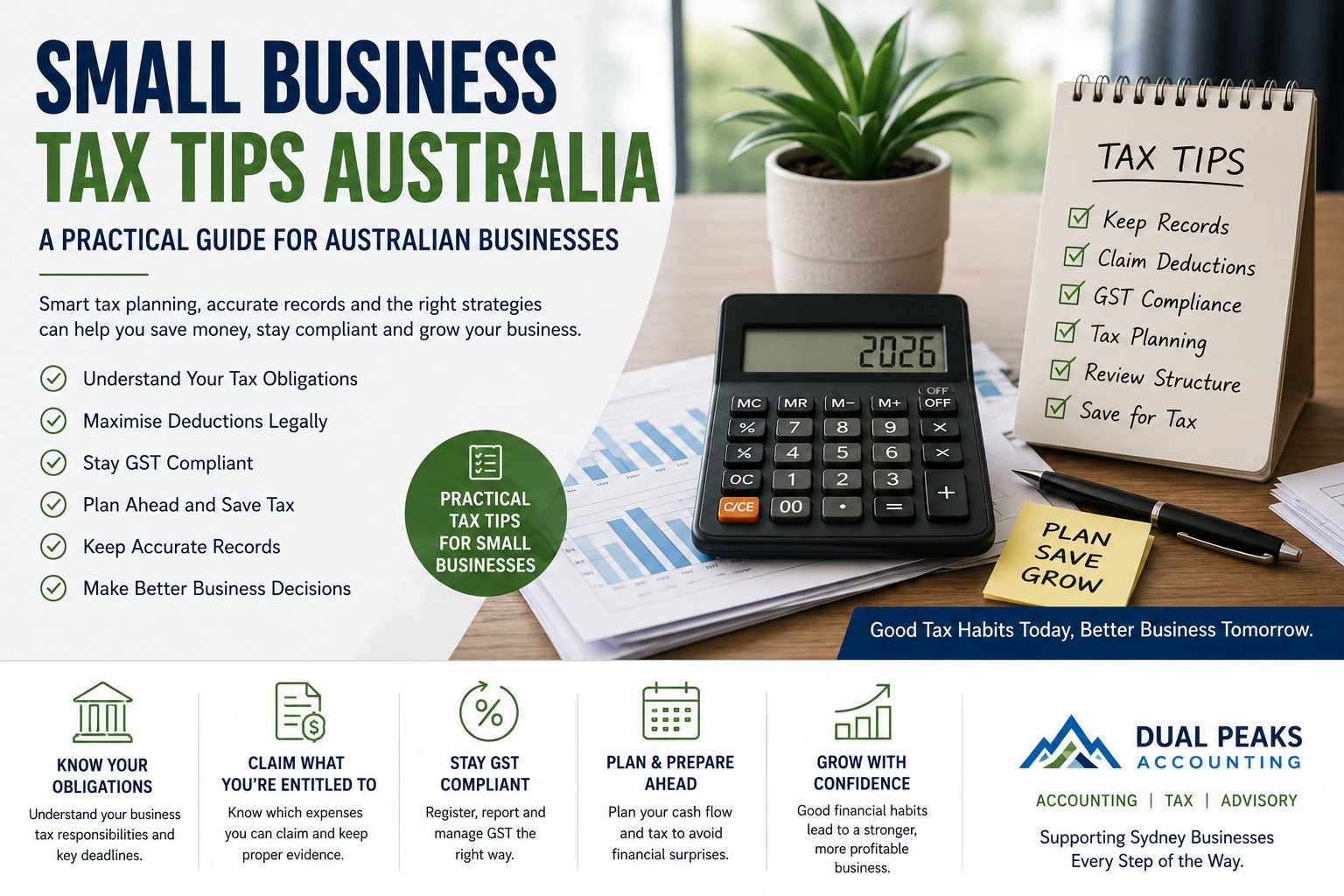
In this guide, we cover practical small business tax tips for Australia that can help you stay organised and make better financial decisions.
1. Keep Business and Personal Transactions Separate
One of the simplest ways to improve financial organisation is to separate business and personal transactions as much as possible.
Using a dedicated business bank account can make it easier to:
- Track business income
- Identify business expenses
- Reconcile transactions
- Prepare financial reports
- Provide records to your accountant
- Understand business cash flow
Mixing personal and business spending can make your records harder to interpret and may create additional work when preparing your accounts.
2. Keep Accurate Records Throughout the Year
Don’t wait until tax time to start searching for receipts and invoices.
The ATO requires businesses to keep records that support their income, expenses and tax obligations.
Useful records can include:
- Sales invoices
- Purchase invoices
- Receipts
- Bank statements
- Business expense records
- Payroll information
- GST records
- Asset purchase information
- Financial reports
A consistent record-keeping system can make tax preparation much easier.
3. Understand Which Business Expenses May Be Deductible
A common question from business owners is:
“Can I claim this as a business expense?”
The answer depends on the nature of the expense and how it relates to your business.
The ATO explains that businesses can generally claim deductions for eligible business expenses, subject to the applicable rules and requirements.
Potential business expenses can include categories such as:
- Office expenses
- Business software
- Advertising
- Professional services
- Business insurance
- Employee-related costs
- Certain travel expenses
- Equipment and business assets
However, not every expense is automatically deductible.
An expense may need to have a genuine connection to earning business income, and specific rules can apply depending on the expense.
If an expense is partly private and partly business-related, you may need to apportion the business component.
4. Don’t Confuse a Business Expense With a Tax Deduction
An expense and a tax deduction are not exactly the same thing.
Paying for something through your business does not automatically mean the full amount can be deducted.
Before claiming an expense, consider:
- What was purchased?
- Why was it purchased?
- How is it connected to the business?
- Is there a private-use component?
- What records support the expense?
- Are there special tax rules for this type of expense?
When you are uncertain, speak with a qualified tax professional rather than making assumptions.
5. Understand Your GST Obligations
GST is another important part of Australian business tax management.
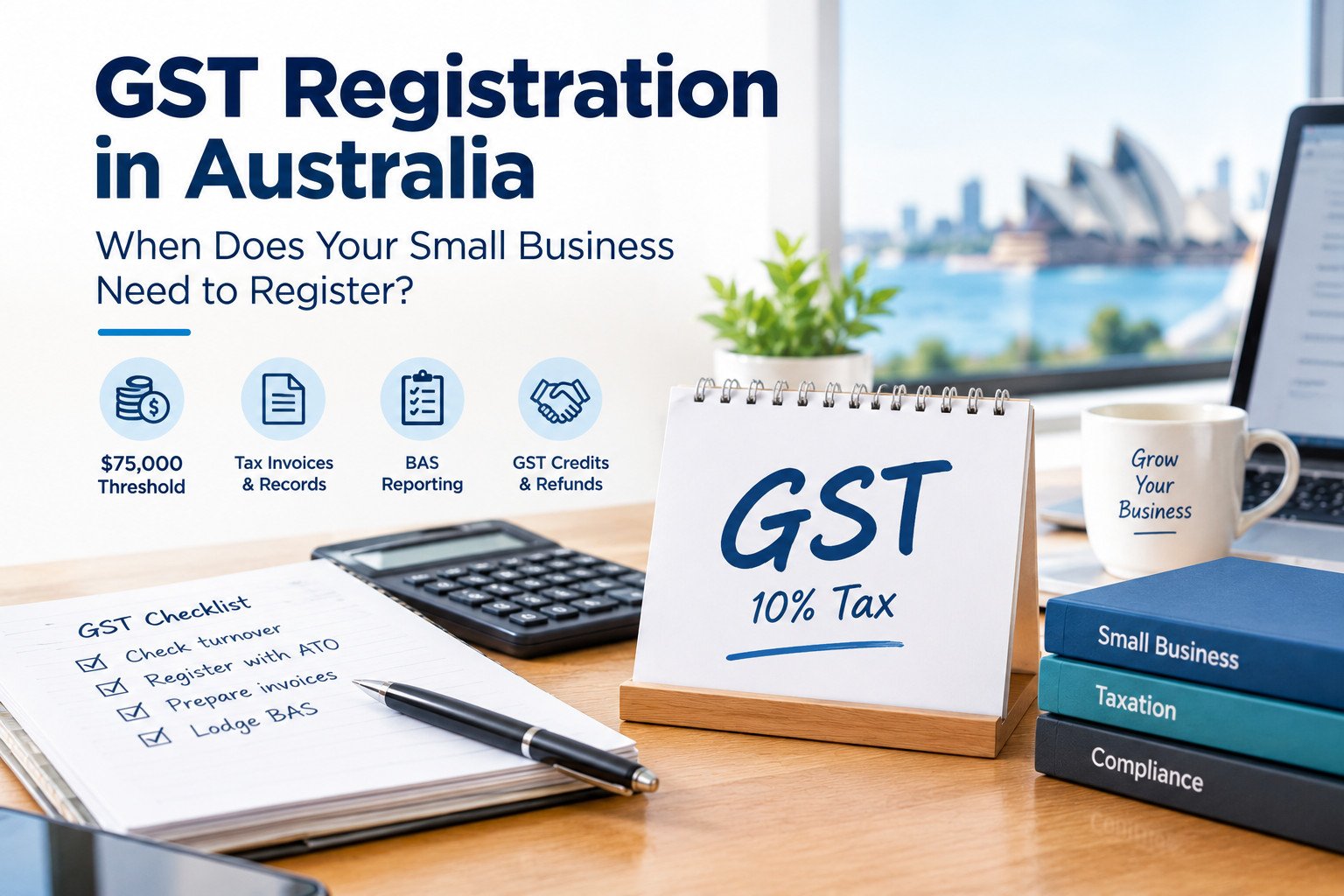
Generally, businesses must register for GST when their GST turnover reaches $75,000, although specific rules and exceptions apply.
If your business is approaching the threshold, don’t leave the decision until the last minute.
Monitor your turnover and understand how GST registration may affect:
- Invoicing
- Pricing
- BAS reporting
- Cash flow
- Record keeping
- GST credits
A tax professional can help you understand how GST applies to your specific business.
6. Put Money Aside for Tax
One of the biggest financial surprises for a growing business can be receiving a tax bill when the available cash has already been spent.
Instead of treating tax as an unexpected expense, include it in your cash-flow planning.
You can consider maintaining a separate reserve for expected tax obligations.
The exact amount you should set aside will depend on your circumstances, including your business structure, income, deductions and other obligations.
A cash-flow forecast can help you understand upcoming financial commitments before they become urgent.
7. Review Your Business Structure
Your business structure can influence your tax and reporting obligations.
Common structures include:
- Sole trader
- Partnership
- Company
- Trust
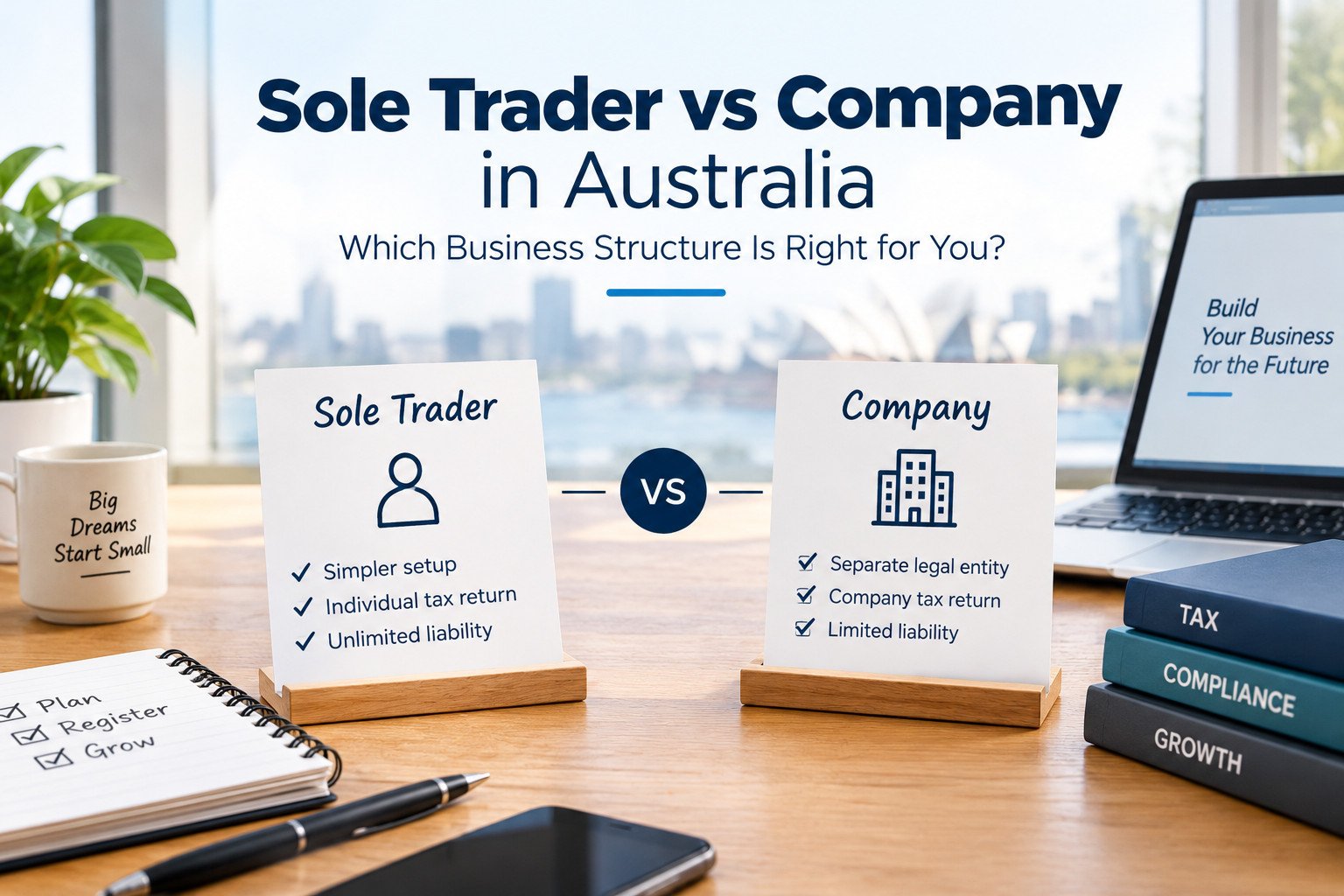
For example, a sole trader generally reports business income through their individual tax return.
A company is a separate legal entity and has different obligations.
If your business is growing, it can be worth reviewing whether your current structure remains appropriate.
This should not be treated as a simple “which structure pays less tax?” decision.
You should also consider:
- Legal responsibilities
- Administration
- Asset protection
- Tax treatment
- Future growth
- Ownership
- Costs of changing structure
Get professional advice before changing your business structure.
8. Don’t Leave Tax Planning Until the End of the Financial Year
Tax planning can be more useful when it happens before major financial decisions are made.
Depending on your circumstances, planning may involve reviewing:
- Expected business income
- Expenses
- Cash flow
- Asset purchases
- Business structure
- Employee costs
- Profitability
- Upcoming tax obligations
The purpose is not to artificially reduce tax.
The purpose is to understand your position and make legitimate, informed decisions.
9. Keep Your Bookkeeping Up to Date
Tax planning is difficult when your financial information is incomplete.
If your books are months behind, you may not have a reliable picture of:
- Revenue
- Expenses
- Profit
- Outstanding invoices
- Bills
- GST position
- Cash flow
Accurate bookkeeping provides the financial foundation your accountant needs.
For a business owner, it also provides visibility into what is actually happening inside the business.
10. Review Outstanding Invoices
Revenue is not the same as cash in the bank.
If customers have unpaid invoices, your accounting records may show sales while your bank account remains under pressure.
Regularly reviewing accounts receivable can help you identify:
- Overdue invoices
- Slow-paying customers
- Cash-flow problems
- Collection priorities
This is both an accounting issue and a business-management issue.
11. Keep Evidence for Your Claims
If you want to claim a business expense, make sure you have supporting records.
The ATO notes that records can include receipts, invoices and other appropriate evidence.
A good digital filing system can make this easier.
For example, you can organise documents by:
- Financial year
- Expense category
- Supplier
- Business asset
- Payroll
- GST/BAS
Cloud accounting systems can also help businesses maintain more organised financial information.
12. Don’t Ignore Small Expenses
Small transactions can add up over a full financial year.
That does not mean every small purchase is automatically deductible.
It means businesses should have a consistent process for recording legitimate business expenses rather than allowing transactions to disappear from their records.
A simple receipt-capture process can save considerable time later.
13. Understand Your Business Income
Tax planning is not only about expenses.
Your business needs to accurately record income from its activities.
For sole traders, the ATO states that business income is generally declared in the individual’s tax return.
Keep track of:
- Customer payments
- Online sales
- Cash sales
- Digital payments
- Other business income
Accurate income records are essential for reliable tax reporting.
14. Use Accounting Software Properly
Accounting software can help automate parts of your financial administration.
Depending on your system, you may be able to:
- Send invoices
- Capture expenses
- Reconcile bank transactions
- Track GST
- Monitor receivables
- Produce financial reports
However, software does not replace good financial processes.
Incorrectly categorised transactions can still create inaccurate reports.
Regular review is important.
15. Work With an Accountant Before You Need One
An accountant can be useful at more than just tax-return time.
A proactive relationship can help you understand:
- Your tax obligations
- Business structure
- Financial performance
- Cash flow
- Record-keeping requirements
- Planning opportunities
- Upcoming financial commitments
The ATO itself recommends seeking professional advice when you are unsure how tax rules apply to your circumstances.
Common Small Business Tax Mistakes
Some common problems include:
Mixing business and personal spending
This can make financial records harder to maintain.
Losing receipts
Without supporting documentation, proving an expense can become difficult.
Ignoring GST obligations
Businesses approaching the GST threshold should monitor their turnover carefully.
Leaving bookkeeping until tax time
This can create unnecessary pressure and make financial information harder to review.
Making assumptions about deductions
Not every purchase made by a business is automatically deductible.
Forgetting about cash flow
A profitable business can still experience cash-flow pressure.
When Should You Speak to a Tax Accountant?
Consider getting professional advice if:
- You are starting a business
- Your business is growing quickly
- You are approaching the GST threshold
- You are hiring employees
- You are changing business structure
- Your tax affairs have become complicated
- You are unsure about deductions
- You have received an ATO notice
- You want help with tax planning
Professional advice can help you understand the rules that apply to your particular circumstances.
Final Thoughts
Good tax management is not about finding shortcuts.
It is about accurate records, legitimate deductions, proper planning and understanding your obligations.
The earlier you organise your financial information, the easier it becomes to prepare for tax time and make informed business decisions.
For Australian small businesses, bookkeeping, cash-flow management and tax planning should work together rather than being treated as separate tasks.
Need Help With Your Business Tax?
Dual Peaks Accounting helps Sydney businesses with tax and compliance, bookkeeping, BAS, payroll and business advisory services.
If you want a clearer picture of your business finances and tax obligations, speak with Dual Peaks Accounting about your requirements.