-
Quick Summary
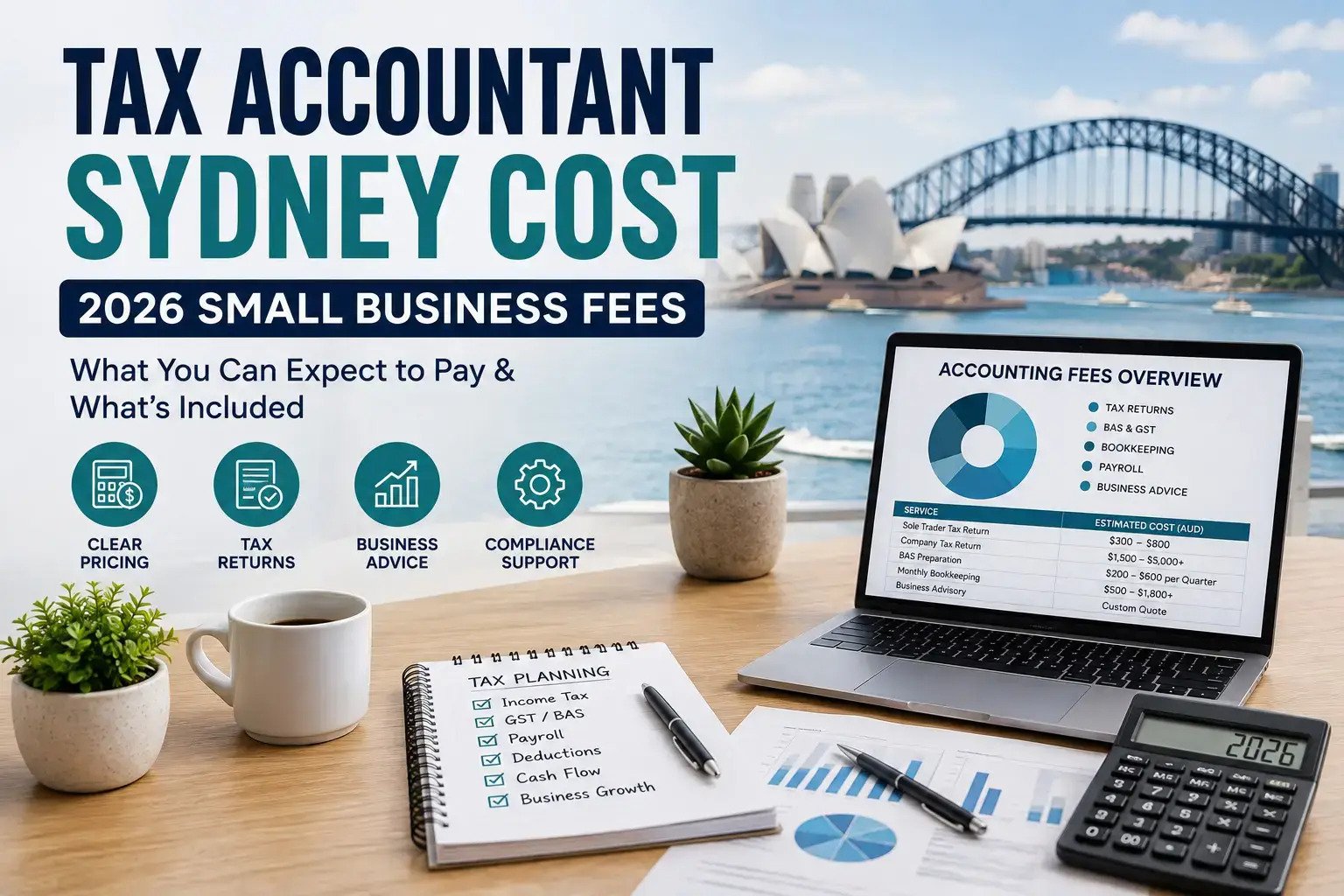
The cost of a tax accountant in Sydney generally depends on your business structure, bookkeeping condition, transaction volume and the level of support you require.
As a general 2026 market guide:
Accounting service Estimated Sydney cost Simple individual tax return $150 to $500 Sole trader tax return $300 to $800 Small business or company tax and compliance $1,500 to $5,000+ per year Ongoing small business accounting support $500 to $1,800+ per month BAS preparation and lodgement Depends on frequency and record quality Bookkeeping, payroll and advisory support Usually quoted separately or included in a monthly package These figures are general market estimates, not fixed prices from Dual Peaks Accounting. Your actual quote will depend on the work involved and what is included. Current Sydney and Australian pricing guides report similarly broad ranges because a straightforward tax return requires much less work than managing a company with employees, GST, payroll and multiple entities.
What Should a Small Business Expect to Pay a Tax Accountant in Sydney?
A sole trader with accurate records and no employees may pay a few hundred dollars for annual tax preparation. A company requiring financial statements, BAS lodgements, payroll support, tax planning and ongoing advice may pay several thousand dollars per year.
The important question is not simply, “How much does an accountant cost?”
A more useful question is:
What services, professional support and risk protection are included in the accountant’s fee?
A low fee may cover only the preparation and lodgement of a tax return. A higher quote may also include bookkeeping reviews, BAS preparation, tax planning, payroll guidance, software support and access to advice throughout the year.
Why Do Tax Accountant Fees Vary So Much in Sydney?
Accountants do not price every client in the same way because every business has different reporting requirements.
The following factors have the greatest effect on cost.
1. Your Business Structure
A sole trader is usually simpler to manage than a company, partnership or trust.
A business operating through multiple companies or trusts may require:
- Separate tax returns for each entity
- Additional financial statements
- Inter-entity account reconciliation
- Trust distribution planning
- Director loan account reviews
- More detailed tax planning
The more entities involved, the more time and technical review the accountant may need to complete.
2. The Condition of Your Bookkeeping
Well-maintained records can reduce accounting time and help your accountant provide a more accurate quote.
Professional bookkeeping services can also help keep records accurate throughout the year and reduce unnecessary cleanup work at tax time.
Your costs may increase when:
- Bank accounts have not been reconciled
- Business and personal expenses are mixed
- Receipts or invoices are missing
- Transactions have been entered incorrectly
- GST coding contains errors
- Previous BAS statements need correction
- Several months of bookkeeping must be completed before tax work can begin
Keeping your accounting software current throughout the year can make tax preparation more efficient.
3. Your GST and BAS Obligations
A business registered for GST may need professional BAS and tax compliance support on a monthly, quarterly or annual basis.
The cost will depend on:
- How frequently your BAS is lodged
- The number of business transactions
- Whether records are already reconciled
- PAYG withholding obligations
- GST adjustments or corrections
- Whether the accountant also provides bookkeeping
BAS work may be charged separately, included within an annual package or combined with monthly accounting support.
4. Whether You Employ Staff
Businesses with employees usually have additional responsibilities involving:
- Single Touch Payroll reporting
- PAYG withholding
- Superannuation
- Payroll reconciliation
- Employee records
- End-of-year payroll finalisation
Payroll errors may also require additional investigation and correction, particularly where reported figures do not match the accounting records.
5. The Level of Advice You Need
Basic tax compliance and professional business advisory services are different types of financial support.
A tax-compliance engagement may focus on preparing financial statements and lodging required returns. An advisory engagement may also include:
- Tax planning before the financial year ends
- Cash-flow forecasting
- Budget preparation
- Profitability analysis
- Business structure reviews
- Management reporting
- Growth planning
- Regular financial meetings
Dual Peaks Accounting positions its services around tax, bookkeeping, payroll, cloud accounting and practical business advisory support for startups, sole traders and growing businesses. The firm operates from Roselands and supports businesses across Sydney.
Is Fixed-Fee, Hourly or Monthly Accounting Better?
There is no single pricing model that works for every business.
The best option depends on whether you need occasional assistance or ongoing support.
Pricing model Best suited to Main consideration Fixed fee Clearly defined annual tax or compliance work Confirm exactly what the fee includes Hourly billing One-off advice, corrections or special projects The final cost may be difficult to predict Monthly package Businesses needing regular bookkeeping, BAS, payroll and advice Check the monthly service limits and exclusions Custom annual package Companies with recurring compliance and planning needs Make sure additional work is clearly priced When Does Fixed-Fee Accounting Make Sense?
Fixed-fee accounting may suit a business with predictable requirements, such as:
- Annual financial statements
- One company tax return
- Quarterly BAS lodgements
- A set number of advisory meetings
- Basic email and telephone support
The advantage is cost certainty. However, business owners should still check whether cleanup work, amended returns, payroll corrections and ATO correspondence are included.
When Is Hourly Billing Appropriate?
Hourly billing may be practical for:
- A one-off tax planning meeting
- Correcting historical bookkeeping
- Reviewing a proposed business structure
- Responding to an ATO matter
- Preparing financial information for finance applications
- Specialised advice outside an annual package
Ask for an estimated number of hours before approving the work.
When Is a Monthly Package Better?
A monthly accounting package may be suitable when your business needs support throughout the year rather than only at tax time.
Ongoing support may include:
- Bookkeeping
- Bank reconciliation
- BAS preparation
- Payroll assistance
- Management reports
- Tax planning
- Regular financial discussions
- Cloud accounting support
Current Australian market guides commonly place ongoing small business accounting support between approximately $500 and $1,800 per month, although smaller compliance packages may begin below this range and more complex advisory arrangements may cost more.
What Should Be Included in a Tax Accountant’s Quote?
Before accepting a quote, ask the accountant to explain the scope in writing.
A clear quote should state whether it includes:
- Annual financial statements
- Business or company tax return
- Individual tax returns for directors
- BAS or IAS preparation
- Tax planning
- Bookkeeping reviews
- Payroll support
- Xero, MYOB or QuickBooks assistance
- ATO correspondence
- ASIC-related administration
- Meetings during the year
- Email and telephone support
- Amendments or correction work
- GST
Also ask what happens when work falls outside the agreed scope.
This helps prevent misunderstandings and makes it easier to compare quotes from different accounting firms.
Are Tax Accountant Fees Deductible?
In many circumstances, costs incurred in managing tax affairs can be claimed as a tax deduction. The Australian Taxation Office identifies expenses such as lodging through a registered tax agent and obtaining tax advice from a recognised adviser as potentially deductible costs of managing tax affairs. The correct treatment depends on the service provided and the taxpayer’s circumstances.
Business owners should retain invoices and records showing:
- Who provided the service
- What work was completed
- When the expense was incurred
- How the service related to the business or tax affairs
Your accountant can help determine the appropriate treatment for your circumstances.
How Can You Reduce Your Accounting Costs Without Cutting Corners?
Choosing the cheapest provider is not the only way to control accounting expenses.
Businesses can often reduce unnecessary work by improving their financial processes.
Keep Your Records Up to Date
Reconcile bank and credit card accounts regularly rather than waiting until the end of the financial year.
Separate Personal and Business Spending
Use dedicated business accounts so transactions are easier to identify and categorise.
Use Cloud Accounting Software Properly
Professional cloud accounting solutions using platforms such as Xero, MYOB and QuickBooks can improve record management when configured and used correctly.
Store Receipts Digitally
Digital receipt storage can reduce missing information and make supporting documents easier to retrieve.
Respond to Questions Promptly
Delayed answers can hold up tax preparation and create additional follow-up work.
Ask for a Scope Before Work Begins
Confirm what the accountant will do, what you are responsible for and how additional work will be charged.
Arrange Tax Planning Before Year-End
Tax planning completed before 30 June may give the business more time to consider available strategies. Waiting until after the financial year has ended can limit the actions available.
What Records Should You Prepare Before Requesting a Quote?
Providing useful information from the beginning helps the accountant understand the likely workload.
Prepare:
- Your ABN and business structure
- Previous tax returns
- Previous financial statements
- Current bookkeeping records
- Accounting software details
- Recent BAS statements
- Payroll information
- Number of employees
- Approximate annual turnover
- Number of bank and credit card accounts
- Details of any overdue lodgements
- A summary of the support you need
The ATO generally requires businesses to keep most records for five years. Accurate and accessible records can also help an accountant review deductions, reconcile transactions and respond to questions more efficiently.
How Do You Know Whether a Tax Accountant Is Properly Registered?
Before engaging someone to provide paid tax-agent services, check their registration through the Tax Practitioners Board Public Register.
The register allows consumers to:
- Confirm whether a tax or BAS agent is registered
- Review registration details
- Search by name, business, suburb or registration number
- Check certain publicly recorded sanctions or breaches
The Tax Practitioners Board states that generally only registered tax and BAS agents can charge a fee or receive a reward for providing relevant tax-agent or BAS services.
Registration is an important starting point, but you should also consider the accountant’s experience, communication style and familiarity with businesses like yours.
What Questions Should You Ask Before Choosing a Sydney Tax Accountant?
Ask these questions during your initial consultation:
- Are you registered with the Tax Practitioners Board?
- Do you regularly work with businesses like mine?
- Is your pricing fixed, hourly or monthly?
- What is included in the quoted fee?
- What work would be charged separately?
- Will you review my bookkeeping before preparing the tax return?
- Do you provide tax planning before 30 June?
- Can you help with BAS, payroll and cloud accounting?
- Who will manage my account?
- How often will we communicate during the year?
Clear answers can help you distinguish between a basic lodgement service and an ongoing accounting relationship.
Is a Local Roselands Accountant Better Than a Large Sydney Firm?
A local accountant can offer convenient communication and knowledge of the needs commonly faced by nearby small businesses. A larger Sydney firm may offer a wider specialist team.
The right decision depends on service quality rather than business size alone.
A suitable accountant should be:
- Easy to contact
- Clear about fees
- Familiar with your industry
- Experienced with your business structure
- Proactive about deadlines
- Comfortable with your accounting software
- Able to explain financial information in plain language
Dual Peaks Accounting is based at 8 Leslie Street, Roselands NSW 2196 and provides accounting and advisory support for sole traders, startups and growing businesses in Sydney.
Frequently Asked Questions
How much does a tax accountant cost for a sole trader in Sydney?
A sole trader may pay approximately $300 to $800 for annual tax work, depending on the quality of the records, GST registration, deductions, assets and whether bookkeeping or BAS work is required.
How much does a small business accountant cost per year?
A small business may pay approximately $1,500 to $5,000 or more per year for tax and compliance work. Businesses requiring bookkeeping, payroll, regular BAS lodgements and advisory support may pay more.
Does an accountant charge separately for BAS?
Some accountants charge per BAS lodgement, while others include BAS preparation in a monthly or annual package. Check the engagement letter before accepting the quote.
Is the cheapest tax accountant the best choice?
Not necessarily. A cheaper quote may include fewer services or assume that your records are already complete. Compare the scope, experience, communication and ongoing support rather than price alone.
Can an accountant help reduce my tax?
A registered tax accountant can help identify legitimate deductions, review your structure, improve record keeping and plan for upcoming obligations. They cannot promise an unlawful or guaranteed tax outcome.
Do I need to nominate a new tax agent with the ATO?
Entities with an ABN, excluding sole traders, generally need to complete the ATO client-to-agent linking process when engaging a new registered agent or changing an agent’s authorisations. The business completes the nomination through Online services for business.
Get a Clear Accounting Quote for Your Sydney Business
The cost of a tax accountant should reflect the complexity of your business and the support you actually need.
A clear quote should help you understand:
- What work will be completed
- Which lodgements are included
- How often you can contact the accountant
- Whether tax planning is provided
- How additional work will be charged
Dual Peaks Accounting supports startups, sole traders and growing businesses with tax compliance, bookkeeping, payroll, cloud accounting and business advisory services from Roselands, Sydney.
Book a free consultation to discuss your business structure, current records and accounting requirements and receive a quote based on your circumstances.
This article provides general information only and does not constitute tax, financial or legal advice. Pricing examples are market estimates and may not represent the fees charged by Dual Peaks Accounting or another accounting firm.